

 Facebook
 X
X
 Pinterest
 Copy Link
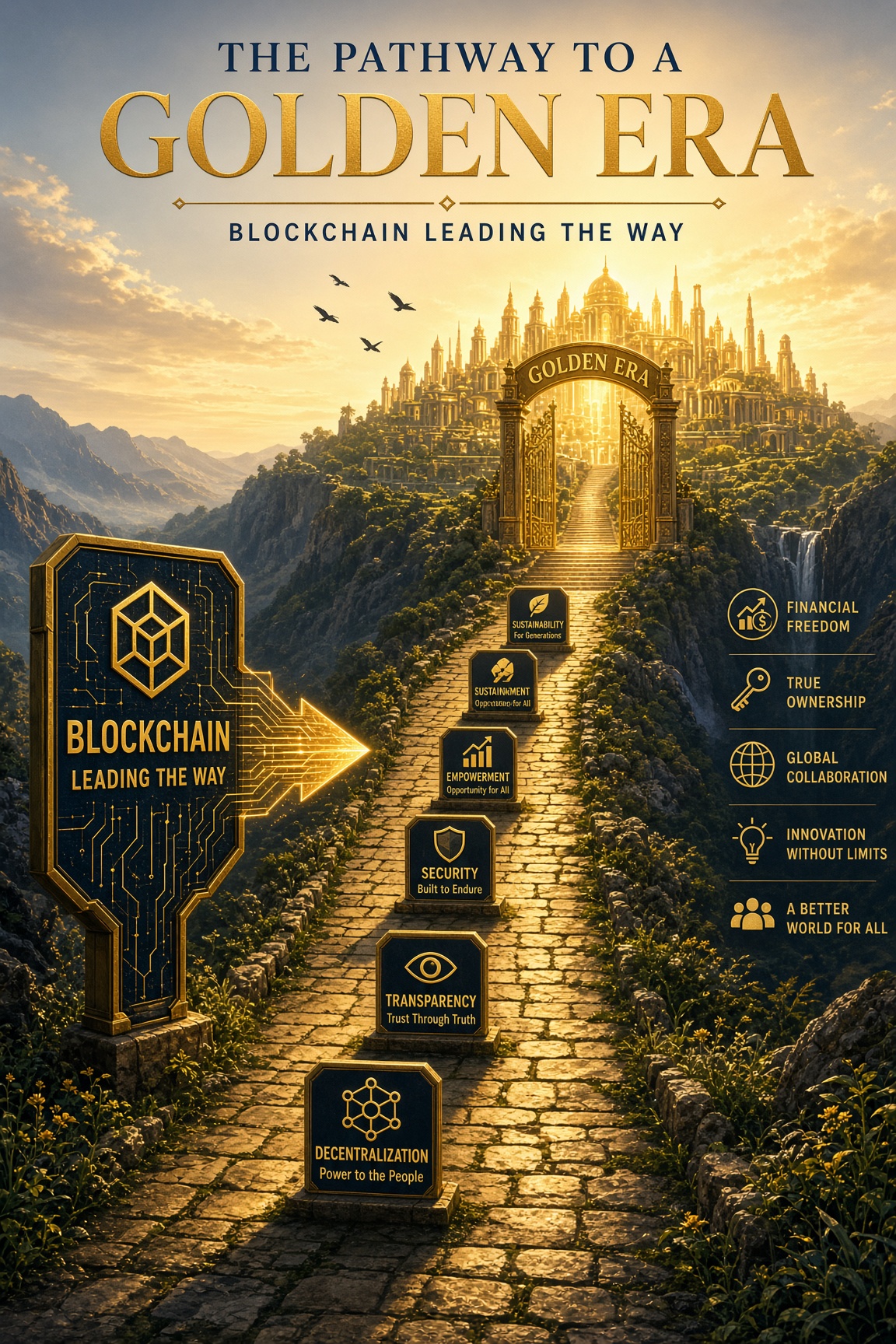
What if the greatest transfer of wealth is upon us?
A thought experiment about a transition, not a crash. Every claim is labeled. Facts are sourced. Speculation is mine.
The Old System Is Strained
Fact: The IMF’s April 2026 Fiscal Monitor put global public debt at just under 94 percent of GDP in 2025, on track to reach 100 percent by 2029—the highest since the Second World War, and a year earlier than the Fund projected the year before. Speaking in Singapore on October 7, ahead of the IMF–World Bank meetings, Managing Director Kristalina Georgieva said advanced economies face “very tough” choices and can no longer rely on growth alone to outrun the interest bill.
Fact: The dollar has lost about 97 percent of its purchasing power since the Federal Reserve was created in 1913. A 1913 dollar buys roughly what three cents buy now — on the order of $32 to $33 in today’s money, using BLS CPI.
Fact: President Trump has repeatedly said tariffs can substantially replace the income tax, invoking the 1870–1913 tariff era. Economists across the spectrum call that mathematically out of reach: even optimistic tariff revenue is on the order of a few hundred billion dollars a year, against roughly $2.8 trillion in individual income tax. On February 20, 2026, the Supreme Court struck down his IEEPA tariffs, 6–3. Chief Justice Roberts wrote that the 1977 emergency statute never mentions tariffs or duties.
Fact: The same day Georgieva spoke in Singapore, Ray Dalio told the Forbes Global CEO Conference there that AI is a “classic bubble” nearing the point where debt-funded spending and rising yields start to matter. “I think we’re close to that,” he said.
Speculation (mine): No single country is ready to replace the United States as the world’s monetary anchor. The transition may not be a crash. It may be a slow migration onto rails that run around the clock, settle in seconds, and belong to no nation. A black swan can dictate the speed. Some of the plumbing may already be closer than it looks — the instant-payment habits inside Zelle, Apple Pay, and FedNow — even if the settlement layer underneath is still the old one.
The Neutral Rails: XRP and XLM
Fact: Ripple was founded in 2012. Stellar was founded in 2014 by Jed McCaleb, who had co-created the XRP Ledger and then left. Denelle Dixon runs the Stellar Development Foundation; McCaleb does not. The XRPL settles in about 3–5 seconds, with autobridging through XRP. Stellar anchors convert local cash to tokens. Fees on both networks are fractions of a cent.
Fact: About 1,700 NDAs with banks and institutions were disclosed in SEC-trial testimony, signed between 2013 and 2020. Ripple CTO David Schwartz has said NDAs are ordinary business practice, and that conspiracy claims of a hidden adoption plan waiting to be unveiled are “almost always completely false.” A firm can use the messaging and treasury plumbing and never touch the token. XRP remains the ledger’s native asset. That is not the same thing as every payment on that plumbing using it.
Fact: Ripple Prime — Hidden Road, acquired in 2025 — was added to DTCC’s NSCC participant directory effective March 2, 2026, for OTC trades, clearing through Pershing. That is a directory listing inside the existing post-trade stack. It is not evidence that DTCC settles in XRP or XLM. It does not.
Fact: On March 17, 2026, the SEC and the CFTC jointly listed 16 crypto assets as digital commodities rather than securities. XRP and Stellar’s XLM are both on that list, along with Bitcoin and Ether. The CLARITY Act, which would have written that framework into statute, failed a Senate cloture vote 49–50 on September 15, 2026 — eleven short of the 60 it needed. On October 5, the CFTC opened its own crypto rulemaking, Regulation CTX and Regulation CAM, using the authority it already has.
Speculation (mine): The NDAs, the NSCC listing, and the commodity classification are laying the groundwork. Whether they terminate on XRP and XLM as neutral bridges between currencies is the open question. Schwartz’s warning belongs in the same paragraph as the hope. Ripple seems to have everything needed to obtain its Fed master banking license, plus 75 licenses operating on 6 continents. They have been quietly building the hidden roads since 2012.
Everything On-Chain
Fact: Tokenized U.S. Treasuries are about $14.8 billion in distributed value. Tokenized gold is on the order of $5 to $6 billion. The SEC approved Nasdaq trading of tokenized stocks in March 2026: same ticker, same rights, with optional on-chain settlement through DTC. Tokenized oil is still a pilot.
Fact: In December 2025, the SEC gave DTCC a no-action letter to tokenize assets it already custodies. In late May 2026, DTCC and the Stellar Development Foundation said DTCC-custodied Russell 1000 stocks, major index ETFs, and Treasuries are targeted for the public Stellar network in the first half of 2027. DTCC’s depository custodies on the order of $114 trillion in securities. The “quadrillions” figure attached to DTCC is notional throughput, much of it derivatives, not new wealth and not a forecast. The news is the rail, not the headline number.
Fact: Bergen County, New Jersey, is putting roughly 370,000 deeds — about $240 billion of property across 70 municipalities — onto a dedicated Avalanche Layer 1 with Balcony. That is a chain-of-title and fraud project, meant to cut a process that could take months. It is not fractional shares, and it is not the XRP Ledger. Dubai and other cities are running title-tokenization pilots. Fractional real-estate claims already trade from about $50 on platforms like Loft—different products. Do not collapse them into one sentence.
Fact: The GENIUS Act, governing dollar payment stablecoins, takes effect January 18, 2027. After that date, issuing a payment stablecoin in the United States without permitted status is unlawful.
Speculation (mine): Money you can tie to a verifiable asset, rather than to endless new borrowing, could loosen the debt cycle. It will not repeal it. The gold standard deepened the Great Depression. Asset-backed money has its own trade-offs: less room to cushion a shock, more room to trust the collateral.
What This Could Fix — and What the Facts Say
My conviction: Fewer intermediaries. Faster title. No perpetual need to borrow the next dollar into existence to keep the pipes full. A housing market where a clean deed is the product, not a 45-day escrow.
Fact: Public blockchains are transparent, not private. XRPL balances are visible to anyone who looks. “Real privacy” is not what these rails offer. Confidential layers are a separate, unfinished argument.
Fact: The biggest single-family landlords are operators like Invitation Homes, Progress Residential, and Blackstone — not BlackRock, Vanguard, or State Street. Large investors own on the order of 3 percent of single-family rentals. A 2026 law now limits purchases by firms that already own 350 or more homes. The Big Three index funds were the largest shareholders of record in most of the S&P 500 as of the mid-2010s, mostly on behalf of ordinary savers in retirement accounts—shareholder of record: a shareholder landlord.
Fact: Research links broader access to finance with growth. It also finds that too much credit can hurt. The goal is access, not a thicker debt stock.
Bottom Line
Speculation (mine): The greatest transfer of wealth in front of us is not a coin replacing the dollar. It is title, Treasuries, and commodities becoming objects that can move after the county clerk goes home. Imagine receiving and sending a real asset in seconds. Imagine getting paid by the hour instead of biweekly. Imagine a closing that does not wait on a wire desk. Imagine owning a percentage of a hotel being built, with the deed trail still pointing at a real building.
On-chain liquidity could widen that access — if the transition happens without the chaos that usually accompanies a monetary reset, and if the token is not just a wrapper with the old custodian still holding the keys. XRP and XLM are a plausible neutral bridge between those rails. They are not yet the bridge. You can lay the pipes beside them.
For information only. Not financial advice.
